
Character.AI made AI characters easy to discover. Pick a character, start a conversation, or build your own persona with a backstory and personality. That simple formula is still appealing, but it no longer covers everything people expect from an AI character platform.
In 2026, users have more specific priorities. Some want conversations that remain coherent for longer. Writers need better control over lore and world-building. Creators may want detailed character profiles, multiple characters in the same scenario, or control over the underlying large language model. Other users simply want a large character library and an interface that works without technical setup.
That is why finding the best Character AI alternatives is less about locating a perfect copy of Character.AI and more about finding the platform that fits your particular use case.
We compared the options below around character creation, memory and context, storytelling features, ease of use, platform support, free access, and meaningful limitations. Rather than treating every AI chatbot as interchangeable, this guide also explains where each alternative actually makes sense.
Best Character AI Alternatives at a Glance
| Alternative | Best For | Character Types | Memory / Context | Free Option |
| Janitor AI | Flexible character creation | Original, fictional & community characters | Depends on setup | Varies |
| NovelAI | Writers & world-building | Original characters, protagonists & NPCs | Lorebook + story context | Free trial |
| DreamGen | AI storytelling | Original & scenario-based characters | Story + scenario context | Limited |
| Chub AI | Character cards | Custom personas & community character cards | Setup dependent | Varies |
| Pygmalion AI | Character/model customization | Custom characters & character cards | Model dependent |
Community options
|
| Chai AI | Casual character conversations | Community-created characters | Conversation focused | Limited |
| Xoul AI | Characters & scenarios | Original & scenario-based characters | Scenario/context based | Limited |
| SillyTavern | Advanced customization | Custom/imported character cards | Backend dependent | Free software |
| Talkie AI | Easy character creation | Original, fictional & community characters | Character/context based | Yes |
| Kindroid | Personalized characters | Personalized custom characters | Continuity focused | Limited |
The important point is that these tools solve different problems. A writer looking for narrative consistency should not necessarily choose the same service as someone who wants to browse community-created characters on a phone.
Why Are People Looking for Character AI Alternatives?
Character.AI is still a recognizable name in conversational AI, but the market around it has matured.
The biggest differences now come down to memory, customization, character creation, context management, storytelling tools, model choice and pricing.
Better Memory and Conversation Continuity
Memory is one of the most misunderstood features in AI chat.
When users say a character has “good memory,” they usually mean that it remembers important details and behaves consistently as the conversation develops.
That can involve several different systems.
A context window determines how much information the underlying LLM can consider at once. A separate memory system might preserve important details beyond the immediate context. Lorebooks and character profiles can provide another layer by storing structured information about people, places, events or rules.
These differences matter during longer conversations.
A character that initially knows it lives in a fictional city, has a particular occupation and knows three other characters should ideally continue respecting those facts many messages later.
Simply advertising a large context window does not guarantee that result.
More Detailed Character Creation
Character.AI makes creating characters relatively approachable, but other platforms take customization in different directions.
A character profile can contain much more than a name.
Depending on the platform, creators may define personality traits, background information, speaking style, appearance, voice, scenario, relationships and examples of how the character should respond.
Talkie, for example, currently lets creators define elements including personality, appearance, voice and skills.
That matters because an AI character is more convincing when these elements reinforce each other.
Advanced frontends take another approach. Instead of giving users a fixed character builder, they provide greater control over prompts, models and character data.
More Control Over the AI Model
Character.AI handles the underlying model for you.
That is convenient, but power users sometimes want more control.
They may want to select an LLM, change generation settings, adjust context handling or connect an existing model through an API.
This is where tools such as SillyTavern differ substantially from Character.AI. SillyTavern works as an LLM frontend rather than an AI model of its own.
Better Tools for Writers
A conversational AI character and an AI writing environment are not the same thing.
Character chat revolves around:
User message → character response → user message → character response
Long-form fiction requires a broader structure. Writers may need character sheets, locations, lore, plot information, style controls, and persistent information about the fictional world.
NovelAI is one example of a platform designed around AI-assisted storytelling rather than simply providing a character directory. It includes dedicated systems for a Lorebook, story settings, advanced text-generation controls, and text adventures.
That difference can make a writing-oriented platform a better Character AI alternative for authors even if it has a smaller social character ecosystem.
1. Talkie AI — Best for Easy Character Creation
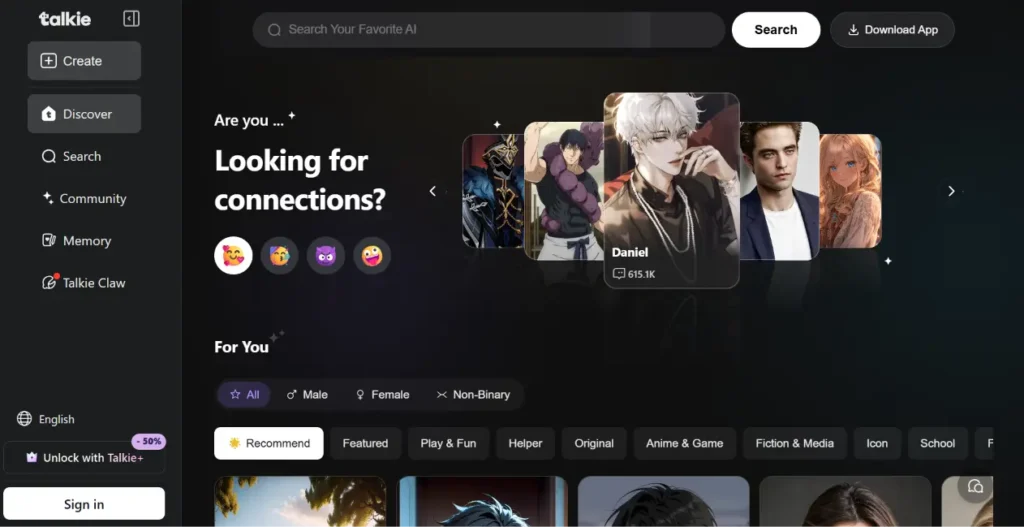
Talkie is one of the closer alternatives for people who enjoy the character creation side of Character.AI.
Instead of asking users to understand APIs, context settings or complicated prompt formats, Talkie provides a structured character creator. Its current tools allow creators to define personality, backstory, and speaking style while also working with appearance and voice.
That matters because an AI character is more convincing when these elements reinforce each other.
Imagine creating a detective character. The backstory explains where the detective comes from, personality settings establish how the character behaves, and speaking style determines how responses sound. Voice and visual customization can then give the character a more distinct identity.
Talkie offers free character creation, with optional premium functionality available separately. It also allows characters to be kept private or shared with its wider community.
The main limitation is control.
Talkie makes character creation accessible by hiding much of the technical complexity. Advanced users who want to choose an AI backend or finely control context construction may therefore prefer something like SillyTavern.
For most beginners, however, that simplicity is a strength rather than a weakness.
Best for: Beginners who want to create and customize AI characters
Standout feature: Personality, appearance, and voice customization
Free option: Yes
Main drawback: Less model-level control than advanced tools
2. SillyTavern — Best for Advanced Character Customization
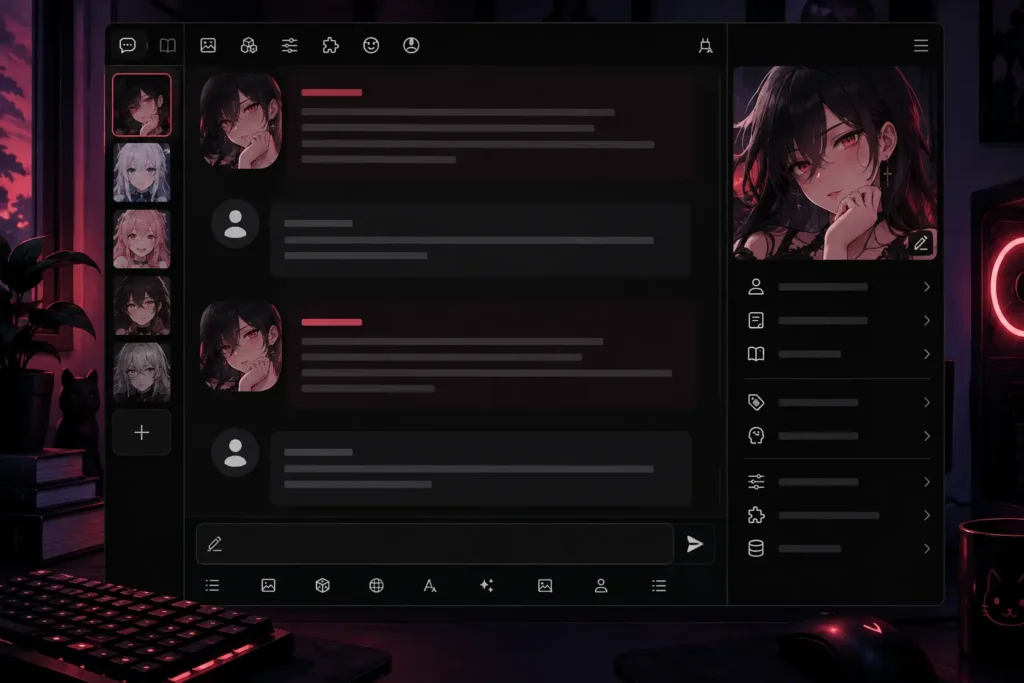
SillyTavern belongs in a different category.
It is not simply another website containing AI characters. It is a locally installed LLM frontend designed to give users more control over how they interact with compatible text-generation models and other AI systems. The software itself is free and open source.
Its character system is considerably more flexible than a basic chatbot profile.
Characters can have a name, personality, and conversation history, and the software supports individual characters as well as multi-character group conversations. It also provides character importing and character management.
This makes SillyTavern interesting for technically confident creators.
Instead of accepting whatever model and settings a hosted character platform chooses, users have more control over the broader AI environment.
That also creates its biggest disadvantage.
Character.AI is designed so that someone can open a browser or app and start chatting quickly. SillyTavern expects considerably more technical knowledge. The software is the frontend; the actual text generation depends on the compatible backend being used.
So calling SillyTavern “free” needs qualification. The frontend itself is free, but the model or service connected to it may have its own cost.
For beginners, it can be excessive. For experienced AI hobbyists who care about character cards, model choice, prompts, and context control, it offers considerably more flexibility.
Best for: Power users who want detailed control
Standout feature: Flexible LLM frontend with extensive character management
Free option: Yes; SillyTavern itself is free and open source
Main drawback: Much harder to set up than Character.AI
3. NovelAI — Best Character AI Alternative for Writers
NovelAI is one of the strongest choices when the reason for leaving Character.AI is storytelling rather than casual chat.
It is fundamentally an AI-assisted storytelling platform. NovelAI includes its Editor, Story Settings, AI Settings, Lorebook, Text Adventure, and numerous advanced generation controls.
The Lorebook is particularly relevant.
Long stories quickly accumulate information: characters, locations, organizations, relationships, objects, and rules of the fictional world. Giving the AI structured access to that information can help maintain narrative coherence instead of expecting everything to remain available through ordinary conversation history.
NovelAI also exposes considerably more writing-oriented controls than a typical character chatbot.
Its settings include generation behavior and context-related options, while its interface supports story management and story downloads.
The free option is limited rather than permanent.
New verified NovelAI accounts currently receive 50 free text generations, alongside limited trials for some of its other generation features. Its standard paid text tier begins at $10 per month.
That is the main trade-off.
Someone looking primarily for endless casual character conversations may find NovelAI unnecessarily complex. Someone writing a fantasy novel with multiple characters, locations, and world rules may find it far more appropriate.
Best for: Fiction writers and world-builders
Standout feature: Lorebook and advanced storytelling controls
Free option: One-time trial
Main drawback: Full ongoing use requires a paid subscription
4. DreamGen — Best for AI-Assisted Storytelling
DreamGen is another alternative that makes more sense when the user’s goal extends beyond one-to-one character chat.
The platform is built around AI role-play and story generation, putting creative scenarios and storytelling at the center of the experience.
That distinction matters.
A character chatbot is good at answering, “What would this character say next?”
A storytelling system needs to think more broadly about what happens in the scene, how different characters interact, and where the narrative is heading.
This makes DreamGen more relevant to creative writers and users building fictional scenarios than to someone who only wants a large directory of characters.
Its biggest advantage is therefore also its main limitation: it is more story-oriented.
If character discovery and a social feed are what you enjoy most about Character.AI, another platform may feel more familiar. If you are trying to develop scenarios, narrative branches or fictional worlds, DreamGen’s approach makes more sense.
Best for: Story scenarios and creative writing
Standout feature: Story and scenario-oriented generation
Free option: Availability and limits should be checked at the time of use
Main drawback: Less focused on social character discovery
5. Chai AI — Best for Casual Mobile Character Conversations
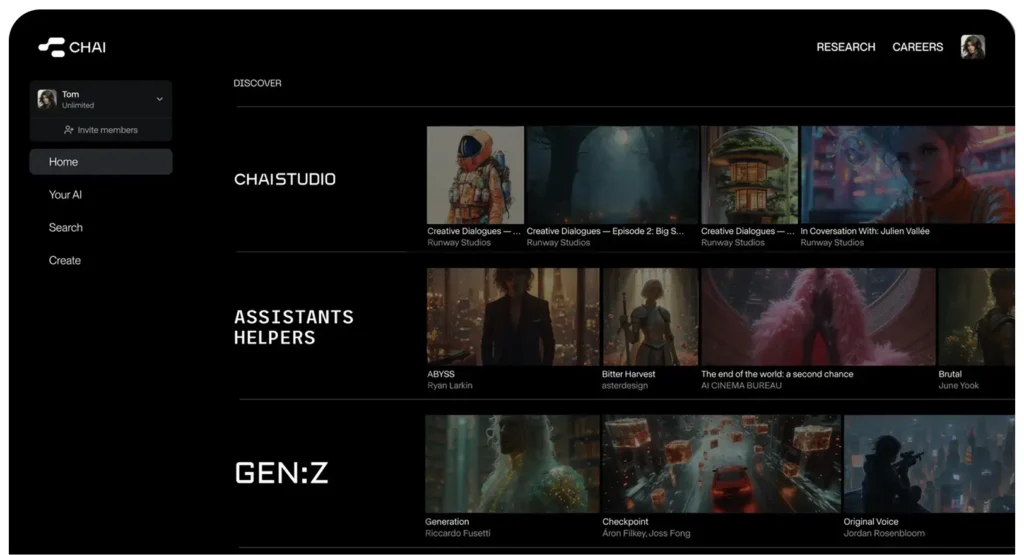
CHAI focuses heavily on the social side of conversational AI.
The product is built around social AI and is available through both iOS and Android.
That makes it an obvious comparison point for users who primarily access Character.AI from a phone.
Mobile usability matters more than it might seem.
A platform can have an excellent underlying language model but still be frustrating if discovering characters, returning to conversations, or navigating profiles feels awkward on a small screen.
CHAI’s strength is that it treats social AI as the product rather than adding character conversation as a secondary feature.
Its weakness is the opposite of NovelAI’s strength.
Writers who need carefully structured lore, extensive world information, and granular narrative controls may prefer a dedicated writing system. CHAI makes more sense when quick character discovery and casual conversations are the priority.
Best for: Casual mobile users
Standout feature: Mobile-first social AI experience
Free option: App access is available; current limits can vary
Main drawback: Less structured world-building than writing-focused tools
6. Janitor AI — Best for Flexible Character Creation
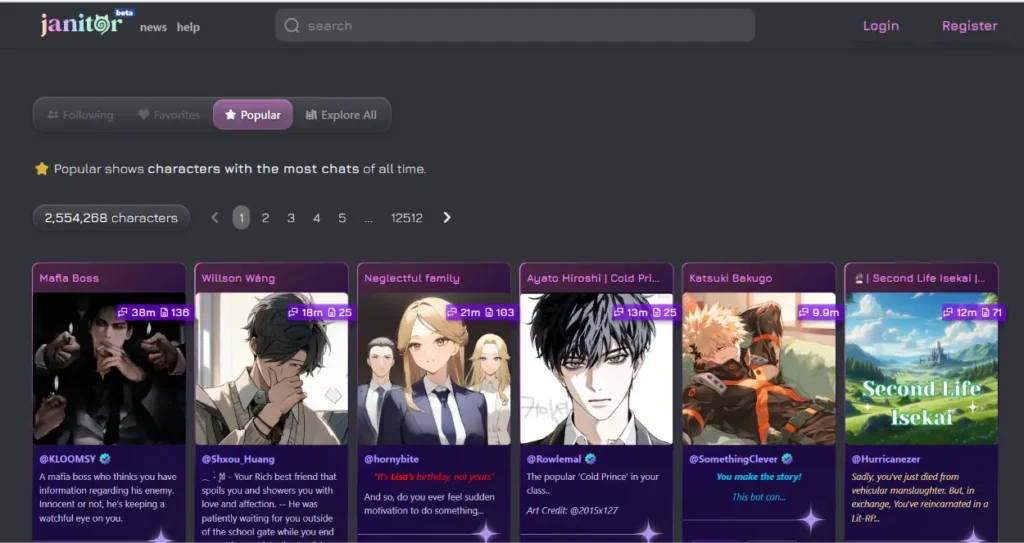
Janitor AI is a character-focused platform that gives users more control over custom personas, personality traits, scenarios and conversation styles. It also supports flexible model options, making it useful for users who want more customization than a basic character-chat interface. The extra configuration, however, can make it less beginner-friendly than Character.AI.
Best for: Flexible character creation and customization
Standout feature: Custom characters with flexible model options
Free option: Free access is available; some model options may cost extra
Main drawback: Advanced setup can be confusing for beginners
7. Chub AI — Best for Character Cards
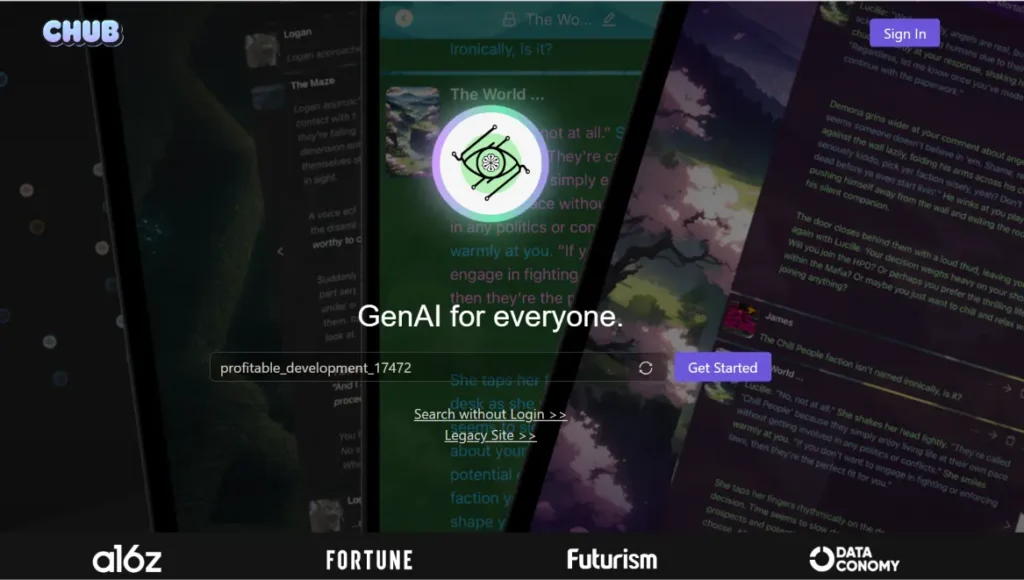
Chub AI focuses heavily on character cards, allowing creators to define a character’s personality, background, scenario and example dialogue in more detail. It is particularly useful for people who enjoy creating and managing their own AI characters instead of only browsing ready-made personas. Its advanced options also mean there is a bigger learning curve.
Best for: Advanced character creators
Standout feature: Detailed character-card system
Free option: Some functionality is available for free
Main drawback: Less beginner-friendly than Character.AI
8. Pygmalion AI — Best for Customizable Character AI
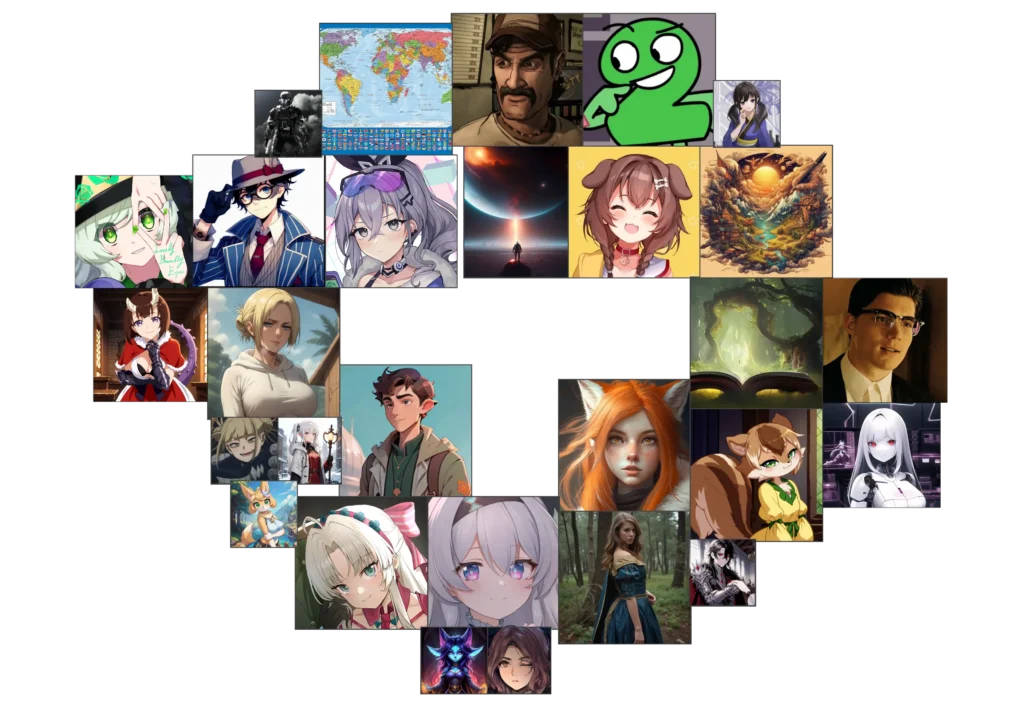
Pygmalion AI takes a more community-driven and customizable approach to AI characters. It appeals mainly to users who want greater control over characters, models and conversation behavior instead of relying on a completely managed platform. This flexibility is useful for experienced users, but the overall experience can feel more technical.
Best for: Users who want greater character and model control
Standout feature: Customizable, community-driven character experience
Free option: Free/community options are available
Main drawback: More technical than mainstream character platforms
9. Xoul AI — Best for Characters and Scenarios

Xoul AI centers its experience around customizable AI characters and scenarios. Users can build personas with distinct personalities and place them into different settings, making it particularly useful for character-driven storytelling. Compared with Character.AI, however, its overall ecosystem and character discovery experience may feel smaller.
Best for: Customized characters and scenarios
Standout feature: Scenario-based character customization
Free option: Limited access depends on the current plan
Main drawback: Smaller ecosystem than Character.AI
10. Kindroid — Best for Personalized Characters and Memory
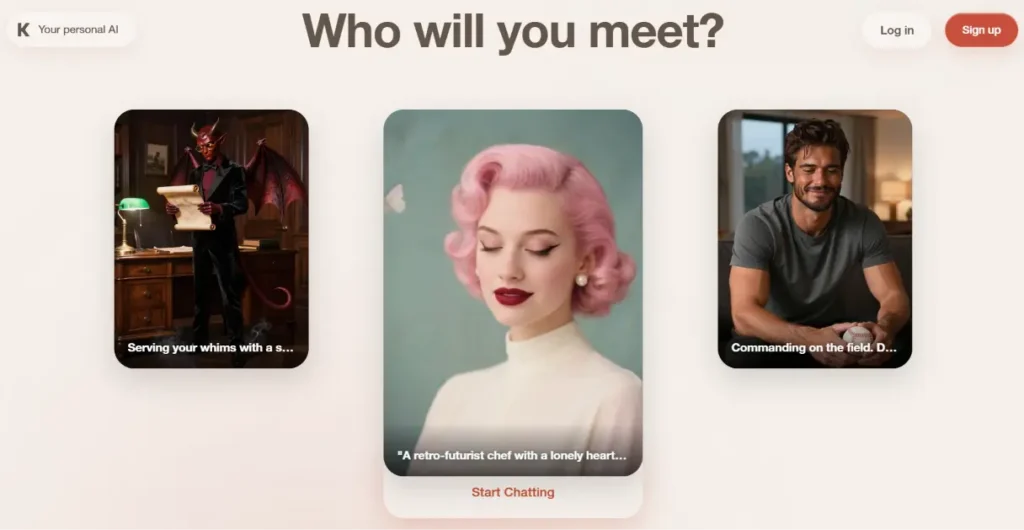
Kindroid focuses on creating personalized AI characters with defined personalities, backstories, and conversation context. Its emphasis on memory and conversation continuity makes it useful for users who prefer developing a smaller number of detailed characters over time rather than constantly switching between public bots.
Best for: Personalized AI characters
Standout feature: Memory and character personalization
Free option: Limited free access is available
Main drawback: Less focused on large-scale character discovery
Character AI Alternatives Compared by Key Features
| Platform | Custom Characters | Character Library / Cards | Story & Scenario Tools | Memory / Context | Ease of Use |
|---|---|---|---|---|---|
| Janitor AI | Yes | Community characters | Yes | Setup dependent | Moderate |
| NovelAI | Yes | Story-focused | Excellent | Lorebook + story context | Moderate |
| DreamGen | Yes | Scenario-focused | Excellent | Strong scenario context | Easy–Moderate |
| Chub AI | Yes | Character cards | Yes | Setup dependent | Moderate–Advanced |
| Pygmalion AI | Yes | Character cards | Setup dependent | Model dependent | Advanced |
| Chai AI | Yes | Community characters | Limited | Conversation focused | Easy |
| Xoul AI | Yes | Character ecosystem | Strong | Scenario/context focused | Easy–Moderate |
| SillyTavern | Yes | Character cards + imports | Strong | Backend dependent | Advanced |
| Talkie AI | Yes | Community characters | Good | Character/context focused | Easy |
| Kindroid | Yes | Personalized characters | Good | Continuity focused | Easy–Moderate |
This comparison also shows why there is no meaningful universal winner.
The strongest option changes when the user’s priority changes.
Memory vs. Context Window: They Are Not the Same Thing
One of the easiest mistakes to make when comparing Character AI alternatives is treating context and memory as identical features.
They are related, but they solve different problems.
A context window determines how much information an AI model can consider during generation. Larger context can help with long conversations, detailed scenarios and complex stories.
Memory is generally about retaining useful information about the user, character, relationship or previous interactions so that it can influence later conversations.
Then there are systems such as a Lorebook, which give creators a structured way to provide important information about characters, places, objects or world rules when that information becomes relevant.
Therefore, don’t choose an alternative purely because it advertises a large context window.
For character-driven conversations, ask a more useful question:
Can the platform keep the information that actually matters to the character and story?
Which Character AI Alternative Should You Choose?
There is no universal winner because these platforms solve different problems.
For easy character creation, Talkie AI provides a more approachable experience. For writers, NovelAI and DreamGen put more emphasis on stories, lore and scenarios. SillyTavern is more suitable for technically experienced users who want greater control over character cards and compatible AI backends.
The other platforms in this comparison focus on different combinations of character cards, custom personas, community characters, scenarios and personalization.
The best choice is therefore the one that addresses the specific reason you are looking for an alternative.
What to Check Before Switching From Character.AI
Before moving to another platform, compare more than the quality of its first few responses.
Check its character-creation system, conversation continuity, context handling, privacy policy, account requirements, pricing, usage limits and supported platforms.
Also consider character availability.
If you mainly use Character.AI because you enjoy discovering community characters, a writing tool with excellent memory may still feel like a poor replacement. Conversely, if you only want to build one detailed original character, a massive public library may not matter.
Free Character AI Alternatives: What Does “Free” Actually Mean?
“Free” can mean several different things in the AI market.
One service may provide unlimited access to a basic model but reserve advanced features for subscribers. Another may provide a limited number of generations or messages. An open-source frontend may cost nothing while the connected AI backend has separate usage costs.
A free trial is also different from a permanent free tier.
When comparing free Character AI alternatives, look at what the free plan actually includes rather than relying only on a “free” label.
Is Character.AI Still Worth Using in 2026?
Character.AI is still relevant, especially for users who value its familiar interface, character creation and large community ecosystem.
It has also continued developing features related to memory and character information.
However, the market has become more specialized.
Writers can choose tools built around structured stories and Lorebooks. Character creators can use platforms centered on detailed character cards. Technical users can choose frontends that provide more control over compatible AI models.
Character.AI therefore no longer has to be the best option for every use case to remain useful.
Frequently Asked Questions
What is the best Character AI alternative in 2026?
It depends on the use case. Talkie is strong for straightforward character creation, NovelAI is better suited to fiction writing, SillyTavern provides advanced technical control, and Poe is useful when model choice matters.
What is the best free Character AI alternative?
Talkie provides free character-creation functionality, while SillyTavern itself is free and open source. Keep in mind that SillyTavern requires a compatible AI backend, which may have separate costs.
Which Character AI alternative is best for writers?
NovelAI is one of the strongest writing-focused choices because it combines text generation with story controls and Lorebook functionality. DreamGen is another option centered on story and scenario generation.
Which alternative gives you the most AI model choice?
Poe stands out for model variety. Its platform combines models from multiple AI providers with a large collection of user-created bots.
Is SillyTavern an AI model?
No. SillyTavern is a locally installed frontend that connects to compatible AI backends and models. That distinction is important when comparing its price and capabilities with hosted services.
Is a larger context window the same as better memory?
No. Context determines how much information an LLM can consider at once, while memory systems may separately preserve and retrieve important information. How a platform manages both can matter more than one context-size number.
Are there Character AI alternatives for mobile?
Yes. CHAI supports iOS and Android, while Talkie also provides a character-focused experience designed for accessible creation and conversation.